Updated September 2026. Investing in DHA Karachi Phase 8 should not start with a generic promise of appreciation or a single “best area.” Phase 8 contains different micro-markets, property types and buyer pools. A residential plot, an older house, a brand-new luxury bungalow, an apartment and a commercial asset can all behave differently even when they sit inside the same phase.
This guide is specifically about investment decision-making: how to define your objective, compare live alternatives, separate asking prices from defendable value, understand risk and think about the future exit buyer before committing capital.
Start with live Phase 8 inventory, not old advertisements.
Browse current houses, plots, apartments and commercial property first. If the right option is not live, post your exact requirement.

Quick Answer: Is Phase 8 an Investment Market?
Phase 8 has active end-user and investor demand, but that does not make every property a good investment. The investment case depends on the exact micro-location, property type, entry price, condition, total acquisition cost, realistic holding period and likely future buyer. A strong property can make sense; an overpriced or poorly selected property can remain difficult to exit even in a well-known DHA location.
For current availability, use the Phase 8 marketplace hub. For street and location selection, use Best Areas to Buy Property in DHA Phase 8. For asking-price context, use the Phase 8 Property Price Trend 2026.
Define the Investment Objective Before Choosing the Property
The same property can be suitable for one buyer and unsuitable for another. Before comparing listings, define what the capital is supposed to achieve.
| Objective | What to evaluate |
|---|---|
| Land holding | Street quality, dimensions, orientation, surrounding development, competing plots and future end-user demand |
| Family home with resale flexibility | Usability, construction quality, layout, maintenance exposure, street and future buyer depth |
| Luxury house investment | Land premium, build quality, special features, replacement cost and the size of the future luxury-buyer pool |
| Rental-oriented apartment | Project quality, building management, service charges, occupancy, realistic rent and resale depth |
| Commercial property | Access, visibility, usable frontage, tenant demand, building feasibility and the specific commercial micro-market |
Residential Plots: Buy the Exact Location, Not the Phase Name
A plot investment is primarily a location and future-buyer decision. Two plots of the same size can justify very different values because of street, dimensions, orientation, corner or open-side position, road width, nearby construction and access.
For a plot buyer, compare several genuinely similar live options rather than relying on one advertised demand. Review the dedicated DHA Phase 8 Residential Plots guide and then check the live Phase 8 inventory.
Houses: Separate Land Value from Building Value
With houses, investors should avoid paying one blended premium without understanding what they are buying. Break the asking price into land position + building condition + construction quality + layout + special features + immediate repair liability.
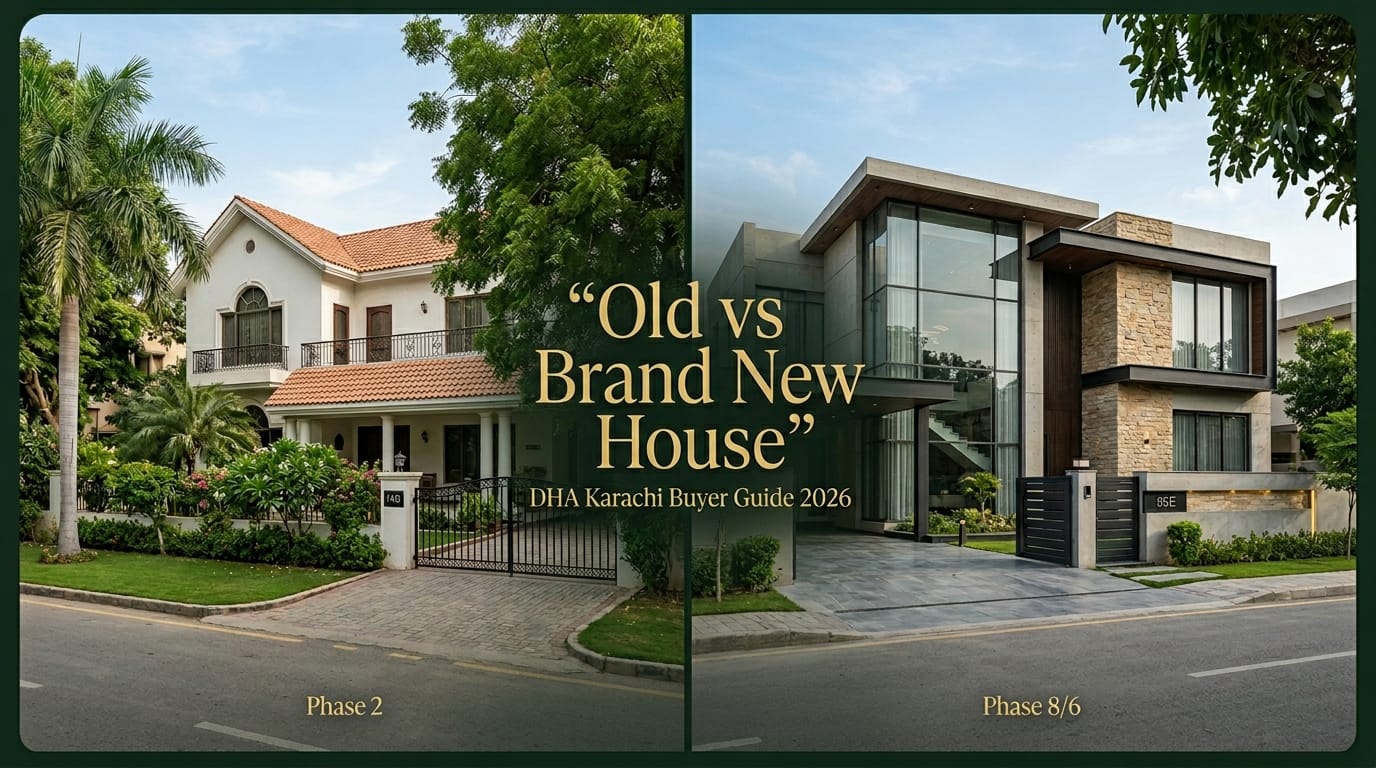
Brand-new does not automatically mean well built. Older does not automatically mean poor value. A technically sound house on a strong street may have better resale depth than a visually impressive property with weak planning or execution. Use the Designer Houses in Phase 8 buyer guide for this segment.
Apartments and Projects: Evaluate the Building and Project, Not Only Phase 8
Apartment and project investment depends on factors that are different from plots and bungalows: developer or project profile, construction or completion position, building management, service charges, parking, views, unit efficiency, rental usability and the depth of the resale market for that specific project.
Use the ApnaDHA Projects directory to compare current and upcoming developments. Do not apply plot-market assumptions to an apartment simply because both are located in Phase 8.
Commercial Property: Treat Each Commercial Pocket as Its Own Market
Commercial plots, offices, shops and buildings require business-level due diligence. Road hierarchy, frontage, parking, visibility, permitted use, building feasibility, tenant profile and surrounding commercial activity can matter more than the broad Phase 8 label.
For Al-Murtaza, Peninsula, Sahil and other commercial pockets, use the dedicated Phase 8 Commercial Plots guide rather than using residential assumptions.
Micro-Location Is the Core of Phase 8 Investment Analysis
Phase 8 is too large for one valuation rule. Qasim-side, Faisal-side, Zulfiqar-side, Creek-side, individual zones and extension pockets can have different access, surrounding development, street character and buyer preferences.
Before treating a location as “prime,” inspect the exact street and compare it with alternatives. For the location framework, see Best Areas to Buy Property in DHA Phase 8 Karachi.
Do Not Confuse Asking Prices with Transaction Evidence
Online asking prices are useful market signals, but they are not proof of completed transactions. Listings can be stale, duplicated, withdrawn or intentionally ambitious. A defensible investment decision requires a matched comparable set: same property type, similar size, similar micro-location, similar condition and fresh availability.
For current asking-price context, use the DHA Phase 8 Property Price Trend 2026. For broader city context, use DHA Karachi Property Prices 2026.
The Main Investment Risks in Phase 8
- Overpaying for a label: “prime,” “sea-side,” “brand new” or “investment opportunity” should be supported by property-specific evidence.
- Stale inventory: reconfirm availability and seller demand before using a listing as a comparable.
- Construction risk: weak waterproofing, structure, plumbing, electrical, basement or lift execution can create major post-purchase liability.
- Liquidity risk: very expensive or highly specialised properties can have a narrower future buyer pool.
- Project risk: apartments and under-development projects require project-specific checks rather than generic DHA assumptions.
- Documentation risk: ownership, dues, approvals and transfer position should be verified before meaningful payment.
- Holding-cost risk: maintenance, service charges, renovation, financing and transaction costs can materially change the investment equation.
Think About the Exit Buyer Before You Buy
Investment quality is not only about the purchase. Ask who is likely to buy the property from you later. A standard 500-yard house, a 2,000-yard luxury property, a 100-yard commercial plot and a premium apartment do not have the same buyer pool.
The stronger the future buyer fit, the easier it is to defend value when market conditions change. Unusual layouts, unrealistic asking prices, weak streets, excessive renovation liability or over-specialised features can reduce resale depth.
Phase 8 vs Phase 6 for an Investor
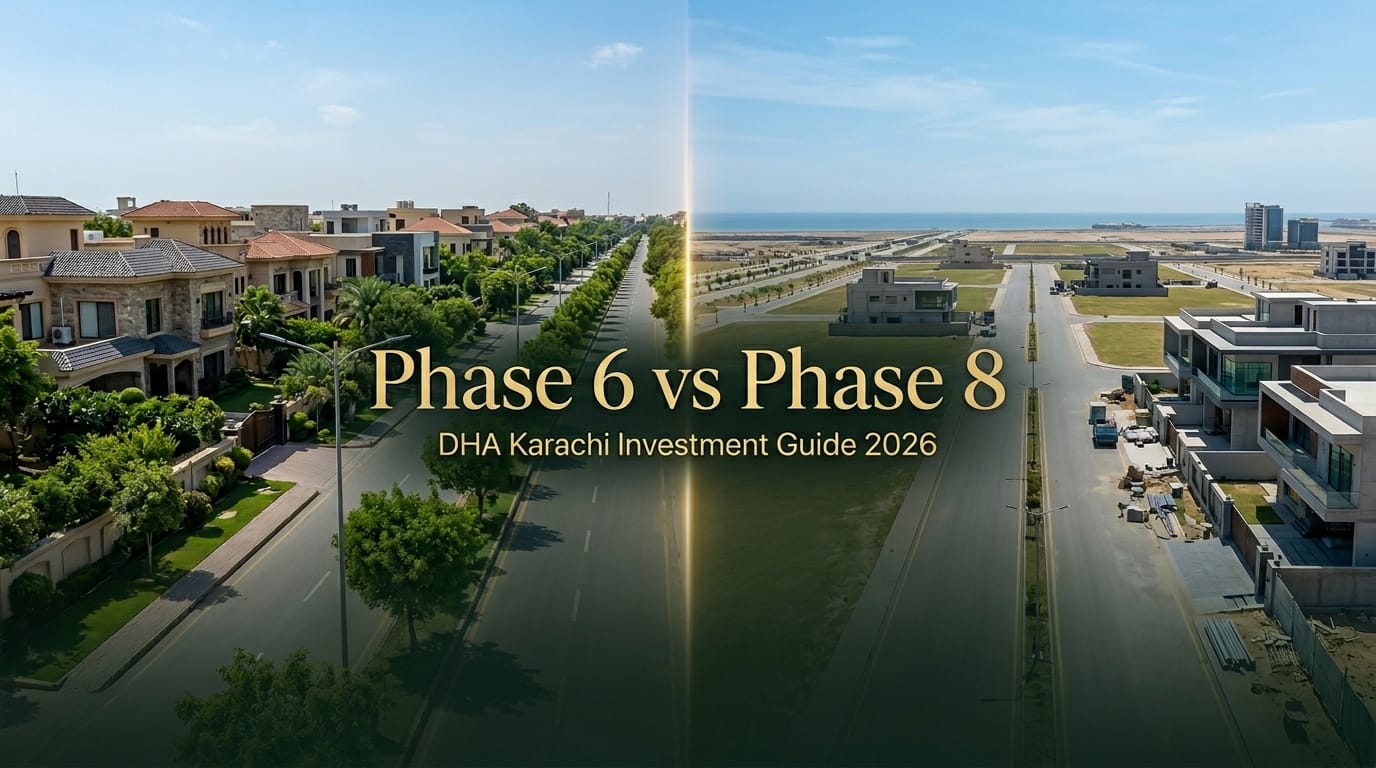
Phase 6 is a mature, heavily built-up market. Phase 8 is larger and provides a broader mix of plots, newer houses, projects and micro-locations. Neither phase should be treated as the automatic investment winner. Compare the exact property and objective through the Phase 6 vs Phase 8 DHA Karachi buyer comparison.
Phase 8 Investment Due-Diligence Checklist
- Define the objective: land holding, end-use, rental, commercial or project investment.
- Set a total capital limit including transfer, taxes, repairs, renovation and holding costs.
- Compare fresh live alternatives in the same property category.
- Verify exact zone, street, access, dimensions and orientation.
- For houses, inspect structure, waterproofing, plumbing, electrical and installed systems.
- For apartments or projects, verify project-specific documentation, management and cost structure.
- Verify seller identity, title, dues and transfer position.
- Separate asking price from defendable value.
- Identify the likely future buyer before paying a premium.
- Do not rely on guaranteed-return, guaranteed-appreciation or blanket ROI claims.
For transaction procedure, use the DHA Karachi Transfer Process 2026 and DHA Karachi Documentation Guide.
Know what you want but the right Phase 8 property is not live?
Post the property type, size, preferred location, must-have features and budget. That creates a live demand signal instead of relying on old ads.
Post Your Phase 8 Requirement → · View Live Buyer Requirements →
Frequently Asked Questions
Is DHA Phase 8 guaranteed to appreciate?
No. No property should be treated as guaranteed to appreciate. Entry price, micro-location, property type, condition, future supply and buyer demand all matter.
Are plots better investments than houses in Phase 8?
They are different investments. A plot is mainly a land and location decision; a house combines land with a depreciating or maintaining building asset. The better fit depends on capital, holding period, end-use plans and risk tolerance.
Should I use one Phase 8 price per yard?
No. Micro-location, road, orientation, dimensions, property type and construction can create large differences. Use matched comparables rather than one phase-wide rate.
Where can I see current Phase 8 properties?
Use the Phase 8 marketplace hub. Inventory changes as agents and owners add, update or remove properties.
From Investment Research to a Real Shortlist
The correct sequence is objective → live inventory → micro-location → matched comparables → due diligence → total-cost analysis → negotiation. Use the investment framework on this page to decide how to evaluate an opportunity, then move to the dedicated Phase 8 pages for current inventory, locations, prices and property-type research.
Browse Phase 8 Properties → · Compare Phase 8 Locations → · Review Price Trends → · Post Your Requirement →
ApnaDHA treats public asking prices as market signals until availability, seller expectation and documentation are reconfirmed. This guide is market information, not a formal valuation or a guaranteed investment-return forecast.